
The Feline Calorie Myth: Why Standard Vet Advice Was Failing My Cats
If you have ever taken a cat to the vet for a checkup, you have probably been handed the exact same generic pamphlet. It usually comes with a stern warning to strictly manage your cat's weight, followed by the golden industry rule: An average indoor cat should eat around 200 to 250 calories per day.
For years, I assumed that was the absolute truth. Vets are the experts, right?
But when you are managing a caboodle of nine cats, you start noticing patterns that the generic pamphlets completely ignore. I started questioning this "golden rule," and what I discovered during the development of my app completely changed how I manage feline health.
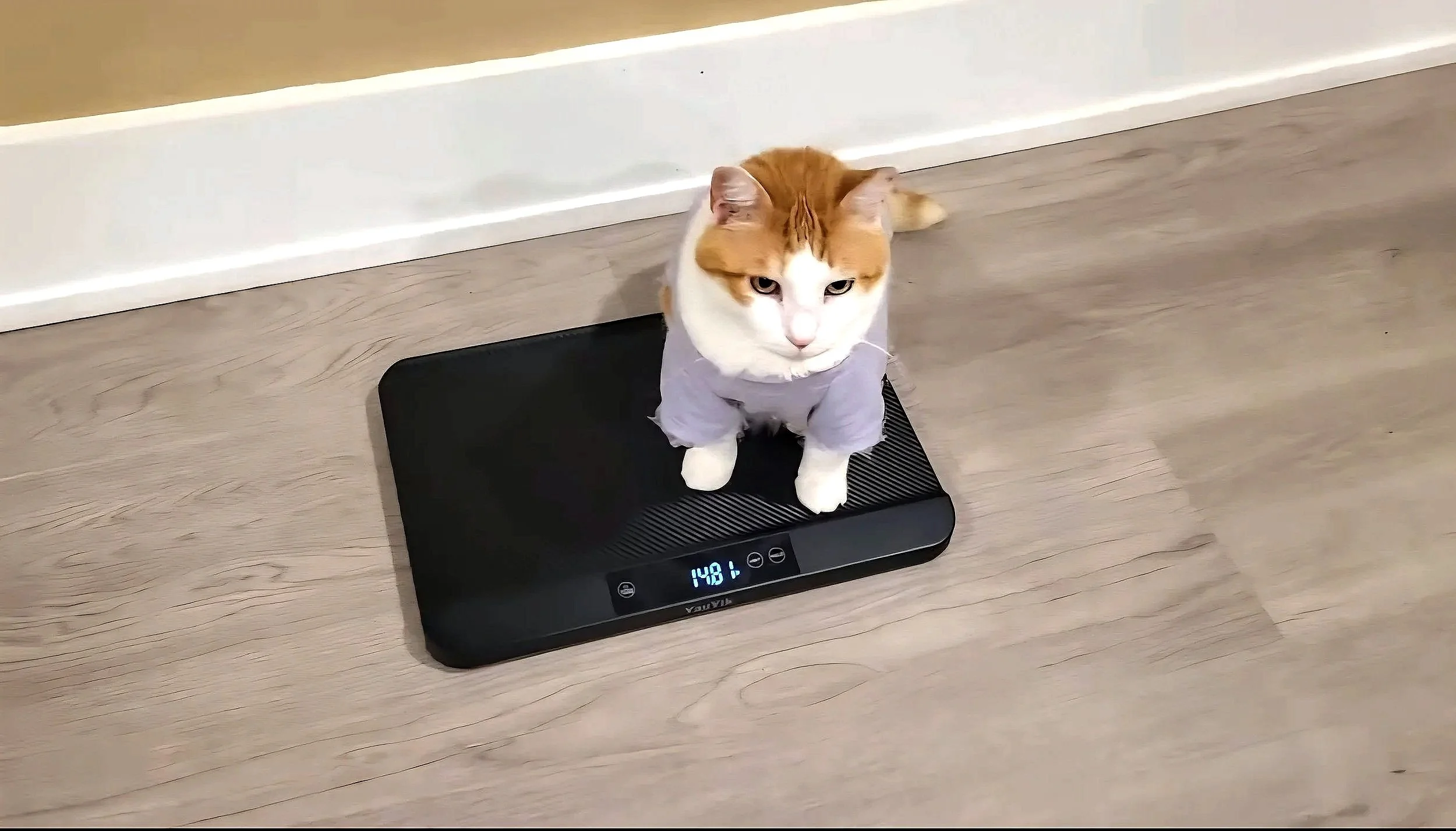
Ballito on a big scale weighing himself
The 250-Calorie Starvation Diet I realized that if I blindly followed the standard 250-calorie rule, I would literally be starving my cats.
When I actually started tracking their intake, the reality was shocking. I have incredibly healthy, muscle-toned boys in my house who easily consume about 500 calories per day to maintain their optimal weight. My senior, Trixie, sometimes requires up to 800 calories a day just to thrive and keep her weight steady against her health conditions.
If I had listened to the industry standard and drastically cut their calories to 250, it would have caused immediate, serious health issues. They would have lost muscle mass, become lethargic, and ended up right back at the vet's office for expensive "treatments" to fix a problem the vet's advice caused in the first place.
The "Aha" Moment: You Need a Baseline, Not a Guess Every cat’s metabolism is completely different. The biggest mistake cat owners make is making drastic dietary changes based on a generic chart without knowing their own cat's baseline first.
You cannot manage what you do not measure.
The truth is, I have stayed away from traditional vets for years. Their misguided advice and the endless cycle of waiting for help that never actually came literally cost some of my cats their lives. I was so tired of feeling helpless and unable to find guidance specific to what my cats actually needed.
Because of that, I took control. I began relying entirely on my own intensive research, carefully tracking my findings, and testing natural remedies from highly respected companies. The results were undeniable—sometimes even pulling us out of emergency situations, like when PranaPets' kidney support stabilized Trixie's kidney issues.
But to manage all of this effectively, I realized I needed an immediate, visual way to map out exactly how many calories my cats were eating versus their actual weight trend over time. This exact realization is why I built PurrTrack.
By tracking their daily meals and looking at PurrTrack's Vitals graph, I finally had hard data. I could see exactly what calorie count kept the boys muscular, and what intake kept Trixie stable. I was finally empowered to tailor their meals to their specific needs, completely bypassing the vet's generic guesswork.
Stop Guessing and Start Tracking My advice to any cat parent worried about their cat's weight or energy levels is this: Do not make drastic changes based on an industry pamphlet. Track their current, natural habits for two weeks first. Find their unique baseline, and then make small, data-driven adjustments.
Take Control: Start tracking their actual calorie-to-weight ratio today to find their true baseline.
Need an Appetite Boost? If you are trying to help a senior cat hit their necessary calorie goals, check out the pure Why Not Natural B12 Drops I personally use in my Remedy Vault.
Track the Progress: Monitoring a multi-cat household requires precision. Use the PurrTrack app to log these remedies in your PurrFolio, track weight changes to the gram, and see exactly how your cats are responding to their holistic care.
Download for iOS | Download for Android | Download for Galaxy